.png)


Osteopathy & Sports Therapy in High Wycombe
At Kaizen Osteopathy each and every treatment is designed for you. See below

What is Osteopathy?
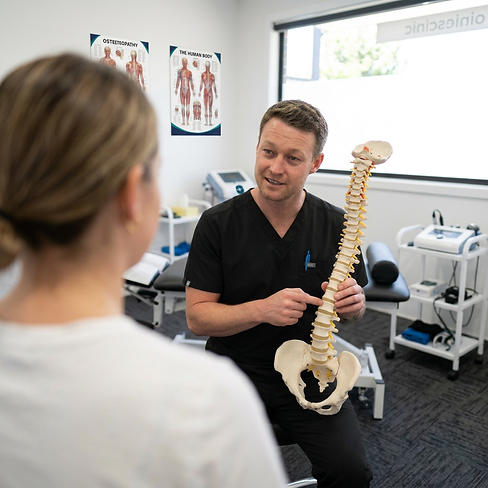
Osteopathy is a hands on approach to healthcare that looks at how your muscles, joints, and tissues work together, not just where you feel pain. Rather than focusing only on the area that's bothering you, I take a whole body view, because pain in one place is often connected to something happening elsewhere.
During a session, I use a range of manual techniques including soft tissue massage, joint mobilisation, and stretching to help ease tension, improve movement, and support your body's own ability to heal. Every treatment starts with understanding your history and what's going on for you day to day, so the approach I take is built around you specifically, not a generic plan.
Osteopathy is a regulated profession. I'm registered with the General Osteopathic Council, which means I'm legally accountable for the care I provide, in the same way a physiotherapist or GP is accountable within their field.
People come to see me for all sorts of reasons. Some are dealing with a specific injury or ongoing pain. Others come because they want to move better, feel less stiff, or simply stay on top of things before small issues become bigger ones. Whatever brings you in, my aim is the same: to understand what's really going on and help you feel better in a way that lasts.
My Approach at Kaizen
Kaizen is a Japanese word meaning "change for the better" — the idea that small, consistent improvements, built up over time, lead to lasting results. It's the philosophy behind the name of my practice, and it's genuinely how I think about treatment. Real, lasting change rarely comes from one big fix. It comes from steady, purposeful progress, session by session.
My own path reflects that same idea. I started out as a sports massage therapist, working professionally with the Scottish Women's National Team, where hands-on manual therapy became the foundation of how I treat. Qualifying as an Osteopath was the next step in that progression, not a departure from it. I've kept everything that made the hands-on work effective, and added the clinical assessment, diagnostic reasoning, and broader treatment scope that osteopathy brings.
In practice, this means every plan I build is progressive. We start by understanding where you are, set clear goals, and move forward in stages, adjusting as we go. Whether you're recovering from an injury, managing a long-term issue, or simply want to move and feel better, the approach is the same: steady, considered improvement, built to last.

What to Expect
Your Initial Consultation
If it's your first time visiting Kaizen, or it's been a while since your last appointment, you'll start with an Initial Consultation. This is where I get to properly understand you, not just the problem that's brought you in.
Case history
We'll start with a conversation. I'll ask about your current symptoms, when they started, and what makes them better or worse. I'll also want to know about your general health, any previous injuries or surgeries, medications you're taking, and how your day to day life looks, your work, activity levels, and anything else that might be relevant. This isn't a formality. The context you give me often points directly to what's causing the problem, not just where you feel it.
Assessment and examination
Next, I'll carry out a physical examination. This usually involves looking at how you move, testing your range of motion, and assessing the affected area alongside the rest of your body. Because osteopathy takes a whole body view, I'm often checking areas you wouldn't necessarily expect, since pain in one place can be caused by something happening elsewhere entirely.
Diagnosis and treatment plan
Once I've built a clear picture, I'll talk you through what I think is going on, in plain language, and what I'd recommend as a way forward. From there, we'll agree a treatment plan together, with clear goals and a sense of how many sessions you're likely to need. Nothing generic. It's built around what your body actually needs.
Treatment
Your first session includes hands on treatment too, so you'll leave having already started the process, not just talked about it. Depending on what we find, this might include soft tissue work, joint mobilisation, or other manual techniques suited to your presentation.
What to expect afterwards
You might feel some mild soreness in the day or two after treatment, similar to how you'd feel after exercise. This is normal and usually settles quickly. I'll also give you guidance on anything to do, or avoid, before your next appointment.


TMJ & Orofacial Pain
If you're carrying tension around your jaw, face and neck, this is work I do a lot of. The jaw doesn't work in isolation. It's closely tied to the neck, the shoulders and how you hold your head, so I assess all of that rather than the joint on its own.
In a first session I'll take a full case history and ask about the things that tend to matter here: sleep, stress, clenching or grinding, any recent dental work. Then I'll look at how your jaw, neck and upper back move, explain what I've found, and tell you honestly what I think is worth doing.
Osteopathy can treat uncomplicated mechanical neck pain, generalised aches and pains, muscle spasms, and tension and inability to relax. If I think what's going on is dental, or needs your GP, I'll say so and point you in the right direction.
Dry Needling
Dry needling is a modern therapeutic technique that involves inserting thin, sterile needles into specific points in the muscles, known as trigger points, to release tension and alleviate pain. While it may appear similar to acupuncture, there are key differences. Dry needling is based on Western anatomical and neurophysiological principles, targeting muscles, tendons, and ligaments to reduce pain and improve function. In contrast, traditional acupuncture is rooted in Traditional Chinese Medicine, focusing on stimulating specific points along meridian lines to restore the flow of Qi (energy) throughout the body. Dry needling is often integrated with other hands-on therapies like massage, while acupuncture is typically a stand-alone treatment.
